Ten things I have learned while working with impact investment funds in Africa
In this article about impact investment, I will share what I have learned from working with two investment funds in Africa. I have written this article about my personal experiences to help counterbalance the academic material on this subject. It is aimed at readers who are interested in impact investment but don’t have any firsthand experience.
This article began as a private reflection in my journal one Saturday morning in October 2020, as I sat outside at a local coffee shop. It has since grown significantly.
The two investment funds
These funds are the AgriFI Kenya Challenge Fund and the Enterprise Zambia Challenge Fund. They have a combined value of 56 million Euros.
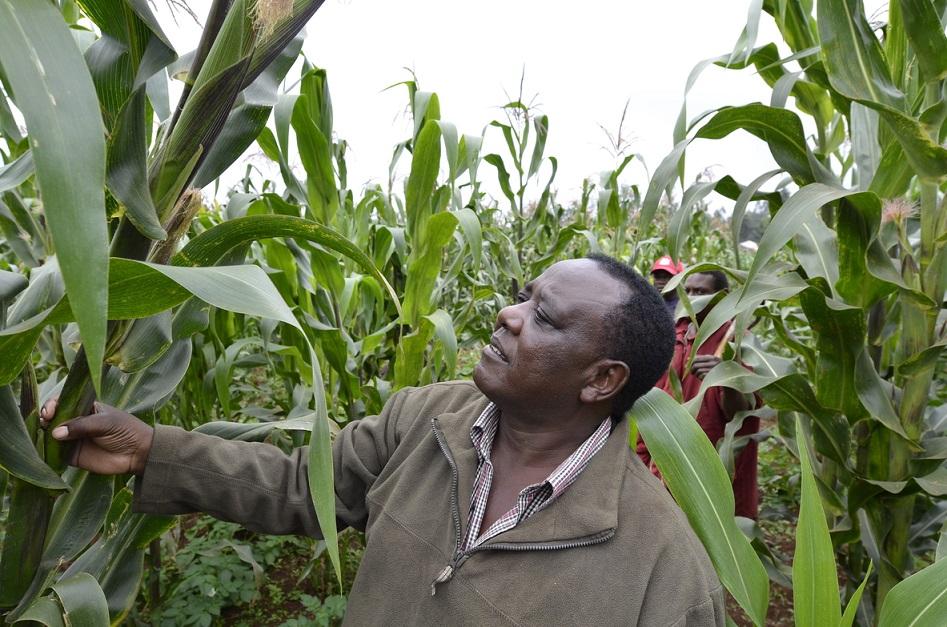
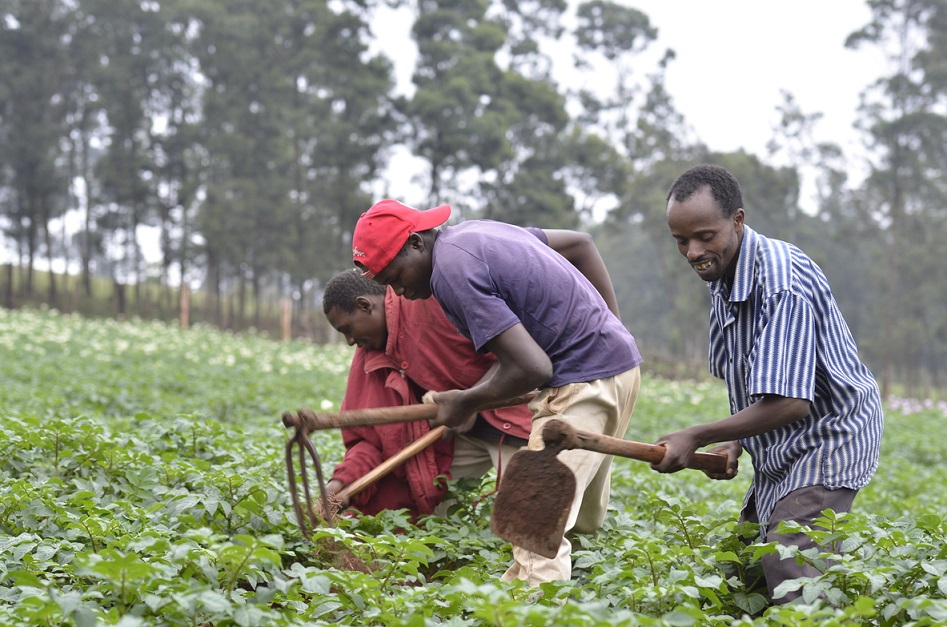
Both funds invest in businesses that operate in agricultural value chains. These businesses might be a crop or livestock producer, a food-processor, an exporter or even a business that sells supplies to small-holder farmers. These investments principally intend to improve and stabilize the income of small-holder farmers, integrate youth and women into the economy and reduce the impact of climate change. They also have secondary ambitions around food security, wider access to a diversified range of finance products (e.g. insurance) and other developmental goals.
Since both these funds are ‘challenge funds’, they provide matching funding to these businesses. This works as follows. These businesses propose a project that will strengthen themselves while also supporting small-holder farmers. The business must prove that they have secured some of the funds required for this project. These challenge funds then provide an equal amount of funding, though there is a cap on the amount provided. In other words, the total value of the projects may be more than double the match funding. This accelerates a project that would otherwise not have happened.
I noticed that the projects that received funding tended to fall in one or more of these categories:
- The business wants to broaden, deepen, or strengthen its supply chain of small-holder farmers.
- The business wants to develop or expand its processing capacity. For example, a cooperative of dairy farmers may want to expand its ability to store, pasteurize and bottle milk, or it may want to develop a range of yogurts or cheeses.
- The business wants to enter new local, regional, and international markets.
- The business wants to serve small-holder farmers by providing them with finance, training, and physical inputs such as seedlings, organic fertilizers, solar pumps and hermetic bags.
The reason that these funds chose to invest in for-profit businesses (instead of non-profit organizations), is because they are more likely to sustain their impact without needing further donor funding.
Imani Developm.ent and Self Help Africa manage these funds on behalf of organizations such as the European Union and Slovak Aid. Imani Development is the technical advisor and focuses more on the due diligence process. In contrast, Self Help Africa focuses more on communications, and on contracting and monitoring the businesses that were funded. My relationship with Imani Development goes back several years.
© GIZ/Dirk Ostermeier
I was primarily involved in due diligence
Over the past two years, I have helped Imani Development with the due diligence process – the process of investigating an organization to assess risks, the benefit of investing in it or working with it, and to verify any assets and liabilities that the business has.
I led the process to revamp the due diligence methodology and tools that we were using, and to train others to use it. This was a big undertaking. It improved the rigor of the due diligence process and helped reveal valuable insights about these businesses.
During this time, I assessed over a hundred concept notes, which are short proposals where the businesses introduce themselves and the projects they wish to run. Back in November 2020, I wrote an article on the 10 mistakes that businesses should avoid when applying for impact investment and writing concept notes, or other proposals.
I have also conducted detailed assessments of about 30 businesses that scored highly in their concept notes. We assessed several aspects of these businesses and the projects they proposed. We also conducted site visits to inspect factories and other sites of operation. I was fortunate to visit some of these businesses in Kenya before lockdown happened in March 2020. Since then, we have relied on local teams to conduct site visits.
Finally, I served as a moderator for many of the assessments done by my teammates.
Lessons I’ve learned from the due diligence process
Here are ten lessons I have learned so far about impact investment funds. More lessons will surely emerge as I expand my work in this area.
Lesson 1 – Due diligence is a competitive yet cooperative process
Due diligence is both an adversarial and cooperative process. On one hand you must pursue the truth against all obstacles. Yet on the other hand, you secretly hope that the business will make it through the process and get funded.
The businesses that we assessed did everything in their power to make themselves look good. They understated their risks and overstated their attractiveness. Some tried to misdirect attention from things that made them look bad and/or to distort our interpretations of these things. I even encountered financial statements where their auditors had tried to do the same.
The word ‘obfuscation’ kept popping into my mind. Wikipedia defines this as the “obscuring of the intended meaning of communication by making the message difficult to understand, usually with confusing and ambiguous language.” My colleagues reported similar experiences when they conducted due diligence.
I expected that the businesses would try and present themselves in a positive light. I find this behavior acceptable, provided they do not lie, in which case there would be severe repercussions. It is rational to want to promote one’s organization. I have done the same on many occasions.
To assess businesses, you must become like Sherlock Holmes or Hercule Poirot. You must learn to interrogate the management team, maintain rapport, and follow your intuition and logic until the truth emerges. You must look for anomalies and verify the seemingly obvious.
The due diligence process is virtuous since we all benefited from it. We found good businesses to invest in, improved our due diligence approach and understanding of agricultural value chains. The businesses also benefited. They learned how they could strengthen themselves and improve how they pursue further investment.

Lesson 2: Don’t underestimate the amount of effort needed to do due diligence properly
I was surprised to learn how much effort it takes to screen and assess a business for investment.
This level of effort depends on the size of the investment. In the case of these investment funds, the investments tended to range from R5 million to R15 million ($320,000 to $960,000 at the time of writing this article). Investment funds that invest small amounts will tend to have a more streamlined process since they take on less risk.
To illustrate the amount of effort involved, here is an abridged process that these two investment funds followed for their application and due diligence process:
- Step 1: The funds used a variety of communication channels to reach eligible businesses, encourage them to apply and explain how to do so.
- Step 2: Applicants submitted concept notes which were then reviewed and scored. This identified which businesses made it through to the next round and were invited to submit detailed proposals.
- Step 3: The assessors then investigated these shortlisted businesses and their proposed projects in detail. This required site visits, long conversations with the management team, financial analysis, and an extensive review of documentation. The team of assessors also met regularly to share their understanding of the different value chains and to calibrate their approach so that any ratings were consistent. This third step took between three to five days per organization, depending on the complexity of a business and the project it proposed.
- Step 4: Moderators then scrutinized the work of the assessors to ensure that they correctly understood the phenomenon they observed, provided appropriate ratings and supporting evidence.
- Step 5: The assessors then produced investment memos, which summarized the organization, the project, and its impact, and explained how to mitigate the risks.
- Step 6: An investment committee consisting of independent experts (e.g. sector specialists, finance and investment specialists, donor representatives) then met to review the investment memos and motivate for which companies to invest in. These recommendations were then reviewed and endorsed by the project steering committee, which governs the fund.
There were other activities that took place once the businesses were notified of the results. These included contract negotiations, developing a monitoring and evaluation framework, and monitoring the achievement of milestones. I was not involved in any of these.
Nevertheless, the steps that I have shared with you, help to illustrate how complex and time-consuming it is to assess an organization for impact investment. It took between three to four months to go through these six steps. A less thorough process would have overlooked important risks and glossed over important details.
Lesson 3: Businesses can have a massive social and environmental impact by virtue of being themselves
It is easy to overlook the positive aspects of businesses in a world where they are sometimes stereotyped as greedy and psychopathic. However, businesses that are mindful of their social, economic, and environmental impact can achieve considerable good as a natural consequence of how they run. This impact is likely to be much greater than their official charitable activities. Businesses achieve this impact through how they procure their inputs, the people they employ and how they treat them, and the types of products they have and who they sell to. Furthermore, businesses can collaborate to create a climate where other businesses can flourish.
The businesses that we invested in all had a positive impact on farmers and their families, and on the environment. This impact stemmed primarily from how they incorporated the farmers in their supply chains and provided them with agricultural support and inputs.
For example, an international cotton agent may wish to tap into the growing premium market for organic and ethically sourced cotton. This agent would need to recruit and support cotton farmers to achieve this organic certification, improve their quality of cotton and the volume they produce. This would ultimately stabilize and improve the revenue of both the cotton agent and the farmers. The additional revenue that these farmers earn, despite being low to begin with, will improve their food security. Some of this revenue will also find its way into the surrounding community as these farmers buy local goods and services.
Some of the businesses also achieved a downstream impact. For example, I assessed this one business that sells a fortified porridge to humanitarian agencies such as the World Food Programme. This food was then used to feed refugees and victims of natural disasters such as floods and man-made disasters such as the famine in Yemen.
In both examples, this impact is achieved through how the business runs as opposed to its charity or philanthropic activities, or from some additional feature that is bolted on.
Lesson 4: Value chain work is complex
I’ve been thriving on the complexity of ‘value chain work’.
A value chain contains all the different activities that will result in the creation of a final product.
For example, here is an oversimplified value chain of a business that might apply to this impact investment fund.
Input suppliers and extension providers (e.g. support, seeds, compost) -> logistics -> productive farming -> logistics -> aggregation -> logistics -> primary processing (e.g. milling flour) -> logistics -> secondary processing (e.g. making bread) -> logistics -> distributor -> logistics -> retailer -> customer.
There tend to be many businesses involved in each part of a value chain. A business might also be involved in one more of these stages (i.e. vertical integration). For example, a business that exports avocado might choose to make its own avocado oil to sell to a retailer or to a business that makes beauty products. Sometimes it makes sense for a business to gain control of a stage that is before it (i.e. backward integration) or after it (i.e. forward integration) to gain more control and make more money.
Impact investors must understand how the entire value chain works together to identify (and manage) the risks associated with their investment. For example, let us say a business aggregates and mills sorghum for the East African Breweries, and has applied for funding to integrate more farmers into its supply chain. We would need to be confident that this brewery is willing and able to purchase the increased volume of sorghum that our business produces, and that the overall demand for beer is increasing in the region. On the other hand, we need to be confident that the small-holder farmers will be able to produce enough quantities of sorghum for our business, and that they are able to access the input they require such as seeds, fertilizers and expertise.
Lesson 5: Agricultural supply chains in Zambia and Kenya are very broad
Many of the projects that we assessed aimed to stabilize and double the income of between 1,000 to 40,000 small-holder farmers. If a fund aims to invest in 10 projects per year, then this could impact up to 100,000 farmers and their families.
This strategy is possible because of the breadth of the agricultural supply chains in countries like Kenya and Zambia, compared with those in South Africa.
Let me elaborate. Where a retailer in South Africa might buy 10,000 chickens from one ‘corporate’ farm each month, an equivalent retailer in Kenya might buy 10 chickens from 1,000 different small farmers each month. The same principle applies to fruits, vegetables, fish, poultry and livestock.
These broad supply chains are more difficult to manage than having a single supplier as they require a decentralized system of agents, aggregators (i.e. people who collate) and logistics. But it does mean that a supply chain can reach far more subsistence farmers. I would like to see many more of our restaurants, retailers and food processors in South Africa do the same.
Lesson 6: Teamwork is required to achieve anything meaningful in the impact investment space
It is very difficult to create positive change on a large scale as one needs to overcome complex and wicked problems.
To create such change, a project team must have advanced skills at its disposal. This requires a partnership of specialized organizations and specialized people within them.
Managing these two investment funds required the expertise of both Imani Development and Self Help Africa. For example, it required people who are agricultural specialists and able to visit farms/factories and assess the quality of extension services (i.e. advisory and training services provided to farmers). It also required economists, financial experts, IT experts etc.
Very rarely do I work on a project alone! I am almost always part of a project team – sometimes a formal team and other times a loose arrangement of colleagues and consultants. Nowadays I understand why group work is so important at schools and universities – it prepares young people for the workplace.
Lesson 7: It requires a lot of knowledge, skill and intuition to assess businesses for investment
We had to gather both objective and subjective information on the businesses as part of our due diligence.
The objective information included things like turnover, financial ratios, number of farmers, production volumes, weather patterns and international demand.
But the bulk of things we looked at were subjective. These included things such as the capability of the management team, quality of governance, the probability that the farmers would increase their incomes or that the businesses would find new markets. The subjective information yielded the most insights but carried the risk that we may have misunderstood something.
Everyone involved in the different stages of this investment process needed to refine their knowledge and terminology in areas such as: agriculture; corporate structures; finance; accounting; strategy; value chains; and international trade. I had to learn the most about agricultural production and food processing, but I was able to provide mentorship in the other areas.
I relied on my intuition to assess these businesses. This enabled me to follow a clue or suspicion to either reveal something hidden or to validate a perception. I encouraged my younger teammates to do the same and received positive feedback that this approach made a difference.
Most of the assessors had an honours or a master’s degree in economics or social development, and five or more years of experience. An assessor had to conduct due diligence on three businesses to be comfortable with the process and about ten businesses to gain a sense of mastery.
We had designed the due diligence methodology to accommodate complex businesses and larger investments. We often assessed consortia of businesses that occupied several positions on their value chains and operated across countries. For simpler businesses and smaller investments, a lighter approach and lower level of skill would have also worked.
I learned that a single slip up could be catastrophic and waste valuable funds. It would also undermine the reputation of the investment funds. Therefore we had so many checks and balances in the process to ensure that the process had integrity.
Lesson 8: Assessors must constantly calibrate their perceptions
To ensure that the due diligence process is fair, our assessment tools calibrated our perceptions to ensure that we had a consistent system of measurement. For example, when we assessed how a business managed its inbound logistics, we converted our perceptions into a rating on a five-point scale where each point had its own description. We also had to substantiate each score with written and auditable motivation.
All assessors were trained in how to follow the assessment methodology and use the assessment tools. During this process, new assessors learned how strictly they should rate all the businesses they were scheduled to assess.
The team of assessors also spent a lot of time comparing viewpoints to develop a shared understanding of the things we were evaluating and how to score them.
Furthermore, the moderators reviewed the ratings and descriptions of each business and its proposed project to ensure that there was good evidence and sound reasoning. This also helped to ensure consistency among the assessors. The moderation process is a critical safeguard that is vital in producing a useful and credible investment memo for the investment committee to review.
Finally, we also reviewed the dataset of ratings to detect any meaningful patterns or biases that we needed to address. This combination of checks and balances ensured that the final ratings were fair and accurate.

Lesson 9: Impact investment funds must clearly define their intended outcomes
Both investment funds are very clear on the outcomes they intend to achieve. These outcomes relate to increasing farmers’ incomes, improving agricultural practices to be resilient in the face of climate change, bringing more women and youth into the agriculture sector and improving food security and nutrition.
We had to balance these outcomes with each other. The business had to grow and be profitable so that our impact could be sustained. The projects had to make commercial sense and help build community assets. On the other hand, we wanted it to have a positive impact on people and the environment. We rarely found organizations that did both to equal measure. This meant that we had to make some difficult trade-offs and balance our outcomes at a portfolio level.
For example, a business might be very profitable and have a competent team and the required organizational systems. However, it might be too far removed from small-holder farmers in its value chain and unable to improve their farming practices and link them to markets. We might also discover that they have partnered with an organization which is overstretched and has never worked with them before.
In contrast, we might find that a business that scored lower on our due diligence tool, but is better positioned to achieve these outcomes, has rectifiable flaws and manageable risks.
With an explicit set of social, economic, and environmental goals and metrics, it became possible to weigh and compare different businesses with each other.
Lesson 10: The due diligence process is only the beginning of the investment process
As I said earlier, I was primarily involved in the due diligence phase, which ends once the Investment Committee reviews the Investment Memos and decides which businesses to invest in. This is a cyclical process as there were multiple calls for funding each year.
Because I was so immersed in assessing businesses, it was easy to overlook the subsequent phases, including:
- Negotiating the investment contract and payment milestones.
- Agreeing on socio-economic and environmental targets
- Developing a monitoring and evaluation framework to ensure that the business stays on track.
- Resolving arrangements around match funding – the funds that a business contributes to the proposed project.
- Designing the risk mitigation strategy.
- Monitoring the performance of the businesses against milestones.
- Providing support as required.
- Evaluating the social, economic, and environmental impact of the investments.
I hope that the future will provide me with an opportunity to be more involved in the setup and management of impact investment funds. It will be interesting to see how this compares with my experience with traditional donor funds in South Africa and Angola.
Conclusion
Although it has been hard work, I have enjoyed my work in 2019 and 2020 with these two impact investment funds. It has been an intense and challenging experience. I have thrived on the strategic complexity and learned a lot about working within an international consulting team.
I have learned much more about impact investment. I have also gained more insight into the economies of Kenya and Zambia, and the social and environmental challenges that they face. It is a pity that my visits to these countries were cancelled in 2020 due to the pandemic.
I hope to continue working with these investment funds, and to do similar work in the future. My attention is shifting towards larger socio-economic development projects and organizations with multinational operations.
This article has hopefully provided you with some insight into impact investing and the complexities involved. I will write more about this topic as I gain more experience in this field.
This article was originally published on MarcusCoetzee.co.za